disable copy paste

Monday, June 13, 2016

Wednesday's Assignment, June 8, 2016

Wednesday's Assignment

When was the last time you saw Canada appear in the news on human rights?

Here are your tasks:1. Visit your classmates' blogs and take their T/F quizzes. If you don't have any comments from your classmates yet, go remind them. Do this first.
2. Explore this organization's website.
3. Where else can you find more news about human rights in Canada? What else is trending? List 3 things.
http://www.cbc.ca/news
http://www.theglobeandmail.com/
http://www.rcinet.ca/
LGBT events, Chinese Foreign Minister Wang Yi , and safe water are trending.
4. Read, listen to, and watch this presentation.
5. Write 5 T/F statements.
    1. Nobody should have to live in fear because of who they are.
    2. Transgender rights are human rights. Transgender people have the same right to respect and dignity as everyone else in Canada.
    3. The four designated groups of "Employment Equity Act" are:
women; Aboriginal peoples;persons with disabilities; and members of visible minorities.
    4. Unions work with organizations to develop and implement an employment equity plan.
    5. The Employment Equity Act (the Act) helps ensure that all Canadians have the same access to the labour market.
6. Write 3 questions about the presentation based on your background and beliefs.
    1. Does your country have Union organizations?
    2. Do your hometown have some employment equity plan?
    3. Is Child labor legal in your country?
7. Leave your comments on 3 classmates’ postings of today. 
 

https://drive.google.com/file/d/0ByOtyZdu9LDuZEV6MDJ2MlVZMVE/view?usp=sharing

Monday, June 6, 2016

Monday's Assignment, June 6, 2016

Monday's Assignment

Welcome back! 
So, you did the right thing and came to class. 
But what makes it right? 
What are human rights? 
Are they the same around the world? 
Does the Canadian government have a position on it?
Anything wrong with this picture?
Here are your tasks:
1. Read, listen to, and watch this presentation.

2. Write 5 T/F statements.
    1. Disability grounds is protected under the Canadian Human Rights Act.
    2. Federal employers are allowed to Pay men and women differently when they are doing same work.
    3. If harassment occurs at work, you can contact the police.
    4. If no policy is available for harassment in your company, you can do nothing.
    5. Your discriminated against complaint must be filed with the Commission within 12 months.

3. Write 3 questions about the presentation based on your background and beliefs.
    1. Would Chinese company like to change the work environment for person with disability?
    2. What can I do if I am harassed in china? Do I have anywhere to complaint?
    3. Is sexual orientation included in Chinese human rights?
     Version 2:
     3. Is the sexual orientation included in the Chinese human rights?
4. Leave your comments on 3 classmates’ postings of today.

Wednesday, June 1, 2016

Wednesday's Assignment, May 31, 2016

Wednesday's Assignment

What are your greatest concerns about workers' rights in Canada? Is it whether your immigration status as a newcomer is a factor? Are you worried about age or racial discrimination? Is it about holiday pay or overtime work? Or whether you could join a union?
About a dozen people protest for migrant workers' rights outside Charlottetown's Province House.
What do you think these people are protesting?
Check out pp. 3 - 6 of this document.1. Enjoy doing the listening activities there.
Listen for the main ideas (Total time: 3:47) 
A. Listen to the talk. Check off the main ideas as you hear them. 
□ a. All workers have rights, including workers who are new to Canada. 
□ b. There are laws about workers’ rights in Ontario. 
□ c. There are human rights laws against discrimination in the workplace. 
□ d. Employers have to try to remove barriers that discriminate against workers. 
□ e. Workers may need to get legal help if their employer or a co-worker treats them unfairly or doesn’t respect their rights. 
□ f. Unemployed workers may be able to get Employment Insurance benefits. 
□ g. Workers’ rights may vary in different provinces and territories in Canada. 
a, b, d, e
B. Check your answers with another student. Were there any ideas you didn’t hear addressed? What ideas did you hear that you want to know more about? 

Listen for details (Total time: 3:47) 
A. Listen to the first section of the talk. (0:00 – 0:38) Apply the information in the talk to the following situations. Do these workers have rights? How do you know? 
1. Abel just started his job two weeks ago. __________________________________ 
2. Wen is not a Canadian citizen. _________________________________________ 
3. Zhiling is not a permanent resident. _____________________________________ 
4. Anissa lives with a family and works as their nanny. ________________________ 
5. Noureen works part-time. ____________________________________________
1. What kinds of workers’ rights laws are there in Ontario? Number the items listed below in the order in which you hear them. Not all of the items in the list will be mentioned. 
___  minimum wage
___ the kinds of questions an employer can ask you before they hire you 
___ what you can do if you’re fired or treated so badly that you are forced to quit 
___ what to wear to an interview 
___ time off from work 
___ vacation pay 
___ hours of work 
___ holiday pay 
___ how to get a raise 
___ health and safety in the workplace

1.the kinds of questions an employer can ask you before they hire you
2. hours of work
3. minimum wage
4. vacation pay
5. holiday pay
6. time off from work
7. health and safety in the workplace
8. what you can do if you’re fired or treated so badly that you are forced to quit

2. Are the laws the same for every kind of job? Circle the correct answer.
a. Yes
b. No 
c. The speaker doesn’t say. 
d. It’s not important.

Where might you be able to get help to find out about your rights? Circle the correct answer. 
a. unions 
b. community agencies 
c. legal clinics
d. all of the above

C. Listen to the third section of the talk. (1:17 – 1:37) What reasons for discrimination are mentioned? Fill in the ones that are missing from the list. 
• race or ethnic background 
• religion 
• age • disability
• sex 
• sexual orientation 
• pregnancy or because you have children 
D. Listen to the fourth section of the talk. (1:38 – 2:16) 
This section gives examples of ways that employers must try to remove barriers that discriminate against workers. Which of the following is not included as an example? Circle it. 
1. You have the right to come back to your job, or a similar job, after a pregnancy leave. 
2. If you need to celebrate a religious holiday, your employer might have to let you take time off. 
3. If you have a vision disability, your employer might have to provide you with reading materials in an alternative format.
4. Because of your health, your employer might need to let you sit while you work.

2. Discuss whether the publisher is reliable.

Tuesday, May 31, 2016

Tuesday's Assignment, May 31, 2016

Tuesday's Assignment

Should employers allow restaurant staff to split their tips among themselves, or should they take some of it back? What happens in other countries?


Here are your tasks:
1. Video Exercise: Tipping Etiquette
  • What does "put yourself in the other person's shoes" mean?
           Put yourself in someone else's place, and see how it feels. 
           I put myself in Tom's shoes and realized that I would have made exactly the same choice.
2. Discussion Strips: Tipping
  • Do you usually leave a tip? -Yes, I do.
  • How much are you suppose to tip different people? - 15% - 20%  of total.
  • Is tipping common in your country? -No, we don't have tipping custom in china.
  • Why is it important to leave tips? -Respect and thank for good services is necessary. 
  • Can you think of jobs where tipping is an important part of the salary? -Waitress, waiter,  Taxi.
  • When are some times you shouldn't leave a tip? There are good services for me.
  • When was the last time you left a tip for someone? Two weeks ago, at a Chinese restaurant. 
  • How much do you usually leave for a tip? -I usually leave 15%  of total.
  • Would you leave a tip even if you thought the waiter or waitress didn't seem to work for it? -No, I think They will assign it by themselves.
  • Do you depend on tips for your income? -No
  • What is the largest tip you have ever left? - About 30 dollars. 
  • What is the largest tip you have ever received? No, I never have received any tip. 
  • Do you feel uncomfortable leaving tips? Why? -At first, I felt uncomfortable. Now, I Already have used to it.
  • Can you think of some places where tipping is required?  -Restaurant, Hotel, Taxi, etc..
  • Can you think of some places where tipping is optional? -Buffet
  • Can you think of some places where tipping is not necessary? -Supermarket. Hospital, Police office.

3. Read Tipping FA
    1. Write 10 T/F statements after reading.
Employment Standards Act, 2000 (ESA)
  • On June 10, 2016, the Protecting Employees’ Tips Act, 2015 will come into force amending the Employment Standards Act, 2000 (ESA) to create rules around the handling of tips and other gratuities in the workplace.
  • Employers can decide who will participate in a tip pool and how it will be distributed.
  • Employers can decide if tipping is allowed in their businesses.
  • If tipping is not allowed, the employer should make it clear to his or her customers that tips and other gratuities will not be accepted by employees or the employer.
  • Employees should track the tips they receive.
  • As of June 10, Employers are allowed to keep the tips and other gratuities that they receive themselves.
  • Before June 10, 2016, the ESA did not cover tips and other gratuities.
  • If service charges are being included on invoices, banquet hall rental agreements, etc., employers should be explicit about who and what that money is intended for
  • Managers can keep Employee's tips and can generally participate in a tip pool.
  • Employers should establish a clear policy for the handling of tips.

    2. Try it out on 2 classmates before editing and posting.

Monday, May 30, 2016

Field trips to Canada Job Expo on last Thursday


We went to the field trips to Canada Job Expo on last Thursday. The most interesting thing was used book sale. We got some souvenirs from different companies. We practiced English speaking at there. On Friday June 3, we're going to go another job Expo. I am very interested in it.

Thursday, May 26, 2016

Thursday's Assignment, May 26, 2016

Thursday's Assignment

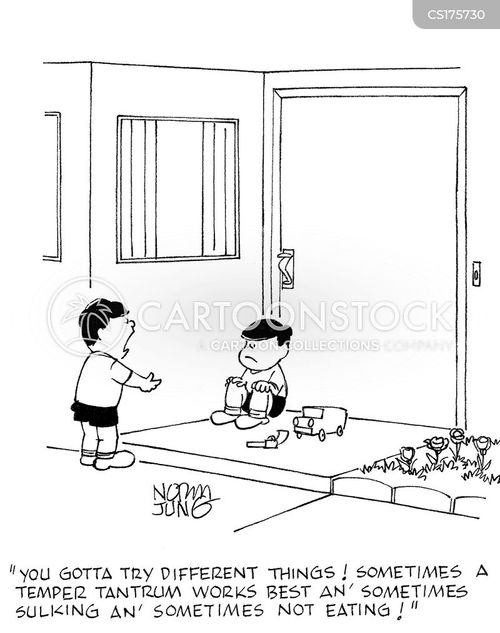
What happens when the kids act up? What could you do? Or, not do?

Damned if you don't; damned if you do. You can't win. Feels that way, doesn't it?
Now you know why!

Here are your tasks:1. Review the attachments for our 1 p.m. Child Welfare workshop.
2. Vocabulary of words in bold: Having a Temper Tantrum

3. Role play: Taking Care of a Willful Child

4. Discuss this claim with a partner: "Willfulness is the root of all evil."
    1. Together, write down 3 arguments (sentences) that support the claim and 3 arguments that refute it.
    2. Choose a position, either supporting the claim or not.
    3. Write a paragraph with a topic sentence clearly stating your position.
    4. Add 4 sentences that deal with the arguments you have written.
    5. Add a concluding sentence to the paragraph, have a new partner check the work, and then publish.

I agree with the position of "Willfulness is the root of all evil."
I think willfulness  is a very bad character. A willful person is inconsiderate, unwilling to be bound by any rules. It is a shortcoming that should be overcome. If you are a 6-year-old kid,  willfulness just bothers your parents. If you are a adult, willfulness will hurt your friends and family.  If you are a leader, willful decision will cause Serious Consequences, enormous financial losses or worse. People living in society , always need to restrictions and limitations. Especially for children, willfulness is a negative factor to their own development.


Having a Temper Tantrum
Alberto: What was that ear-splitting scream?! 

Melissa: That little girl over there is having a temper tantrum. 

Alberto: Oh, great! The movie hasn’t even started and that kid is already acting up. 

Melissa: I hope she’s okay. She looks miserable. Maybe her parents can distract her somehow. 

Alberto: She’s fine. She’s just looking for attention or frustrated she didn’t get what she wanted. If parents didn’t give in every time their child wanted something, kids wouldn’t throw tantrums. 

Melissa: I don’t know. When my son was little, he used to throw tantrums when he didn’t know how to tell us what he needed. He got frustrated and sometimes, he would start kicking and screaming. 

Alberto: Well, I don’t think that’s the case here. Look at those parents. They’re going to buy the girl some candy to quiet her down. That’s just rewarding her for her misbehavior. 

Melissa: What would you do instead? 

Alberto: I would set limits so that things like this never happened. In this case, I would give that girl a spanking. It’s all about having consequences for bad behavior. 

Melissa: Oh, yeah? Did that work with your children? 

Alberto: Uh, I don’t have any kids. 

Melissa: That’s what I thought! 


Taking Care of a Willful Child

Mrs. Mason: So, how did things go? 

Carl: Well... 

Mrs. Mason: What’s the matter? Didn’t you and Jason have a good time while I was away? 

Carl: It was interesting. He was a little willful. 

Mrs. Mason: Yes, he can be a little strong- willed at times, but if you just do what he wants or give him what he wants, he’s just fine. 

Carl: He wanted to eat all of the cookies and I told him no. He threw a tantrum. 

Mrs. Mason: A tantrum? My son can be stubborn, but he never throws tantrums. What did he do exactly? 

Carl: Well, he threw his toys against the wall, jumped on the couch while shrieking at the top of his lungs, and he tried to bite my hand. 

Mrs. Mason: Oh, he was just expressing his displeasure, that’s all. You don’t want children to bottle up their feelings. You should just have given him the cookies to pacify him. 

Carl: Really? I didn’t want to spoil him, and eating all of those cookies wouldn’t be good for him. He seemed to have too much energy already, and he didn’t need another sugar rush. 

Mrs. Mason: Next time, you should just do what he wants. He’ll grow out of this willful stage soon. 

Carl: Next time? 

Mrs. Mason: Yes, didn’t you say you could babysit Jason again on Saturday night? 

Carl: Oh, I’d made a mistake. I have another commitment on Saturday night. 

Mrs. Mason: That’s too bad. We’ll call you the next time we need a babysitter. 

Carl: Sure, I can’t wait. 

Wednesday, May 25, 2016

Wednesday's Assignment, May 25, 2016


A: Hey! What's happened? Whose job is it to operate this machine?
B: Not me, I'm just waiting for my partner.
A: Your partner? Why did the machine stop running? You should open it!
B: Ooh! It's not my duty. My duty is to print labels.
A: Maybe, I don't care about labels. It's because you didn't want to turn on this machine.
B: Oh no, my partner doesn't want me to touch this machine. I'm confused. 
A: If you don't like it here, you can leave!
B: Thank God. Where did you pick up that attitude? I would leave as soon as I can.


new words

spanking
beating up
serious consequences
punishing
eye for an eye, a tooth for a tooth
flogging
Corporal punishment
severe
resorting to violence
Withholding his allowance
ground
pull out the big guns
to talk some sense into him
disapproving
quaking in my boots
That doesn’t make sense.
spoil her rotten
structured and regimented
frivolous
miss out on
taking off the shackles
overprotective
curfews
misbehaves
toe the line
privileges
uptight